
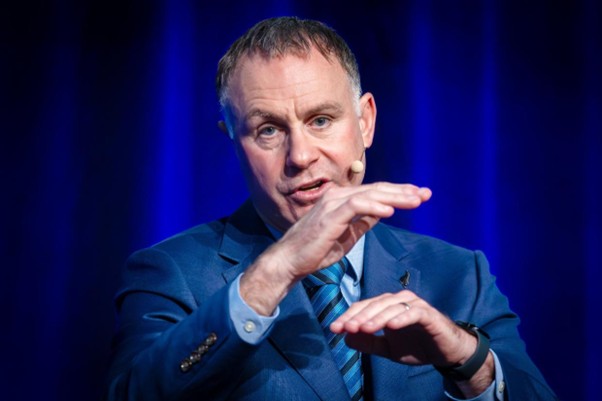
Several recent developments suggest that New Zealand as an effective jurisdiction may be weakening. To stretch the argument, are there indications of state failure in our fair land?
In a recent article Henry Cooke argues that we may be entering an era of “one term” governments, with the current administration somewhat on the back foot, and any successor tempted to avoid anything controversial for fear of meeting the same fate. The topic in question was the issue of taxing capital gains.
Cooke’s solution is to put the issue to a referendum. If it were to pass, which cannot be assumed, that would make it harder for the subsequent government to rescind it. In other words, we have got to the position where, to introduce a basic tax in place throughout OECD countries bar one, we must turn to a referendum.
We have also seen the government attempting to wrestle with the issue of power prices and the dysfunctional nature of the electricity supply and market system. Although it received recommendations from an external consultant, almost all have been rejected. New Zealand was blessed with a highly cost-effective electricity power system, so cost-effective that a major international company was prepared to set up a smelter on the strength of the cheap and reliable supply of power. Somehow, we have squandered this advantage.
Added to the high cost of power – which both ordinary consumers and corporates are up in arms about – is the cost of accommodation. Again, through a reliance on urban sprawl and a failure to muzzle regulatory restrictions, speculative investors, and pressure groups, the “quarter acre section paradise” is long gone and New Zealand is among the most expensive countries for accommodation. At last, there are initiatives to shift the culture towards more intensive and cost-effective housing solutions, but at the bottom of the socio-economic ladder we have the homeless who have been moved out of emergency housing, many to street living.
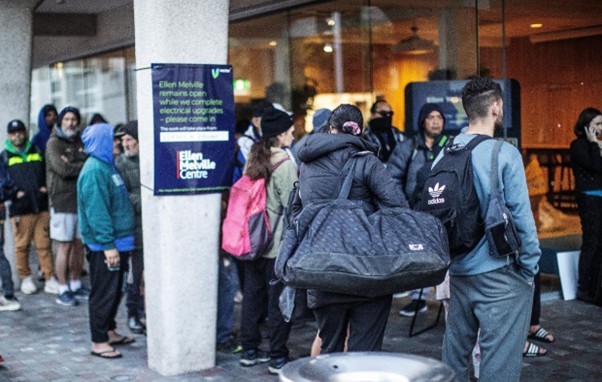
The recent debates on water infrastructure show that these questions are not just a matter for central government. Local authorities were exhorted over a period of 30 years to set aside funds for maintenances, depreciation, and replacement of their water infrastructure, but few did, and others often spent such funds on other requirements. Who can get elected to a local council by arguing for an increase in rates and charging for water? We now have local authorities facing huge increases in rates and debt burdens, many with unviable population bases to support essential investments.
Water infrastructure is of course not the only essential service. Treasury recently released its regular report on the likely future costs of superannuation and health services with our ageing society. Without pre-emptive action a future government will, 40 years down the track, have to increase taxes by 50 %, or double government debt, or introduce user pays, or some combination of these. Such advice from Treasury is routine, but it has also been routinely ignored – and indeed there are many commentators who argue it is less of a problem than Treasury make out.
Other countries have faced this problem and have made the very sensible decision to move from a pay-as-you-go system – which is our current system – to save-as-you-go. This not only takes the burden off income tax – which is doing far too much heavy lifting – but it also in due course increases the financial resources available for investment. This is evident in Australia with its compulsory scheme. We could easily move to a three-pillar system with the existing national super system as the default basic but increasingly replaced or supplemented by KiwiSaver and the Super Fund.
A similar argument applies to healthcare. We are rapidly running out of fiscal headroom and the squeeze on the system is in danger of denying New Zealanders the quality and accessibility of healthcare services they should have. We should extend ACC as a social insurance scheme to illness, at least for non-hospital care. This could in part be funded by levies on items that harm people’s health, like sugar, salt, alcohol, tobacco, vaping, ultra-processed foods.
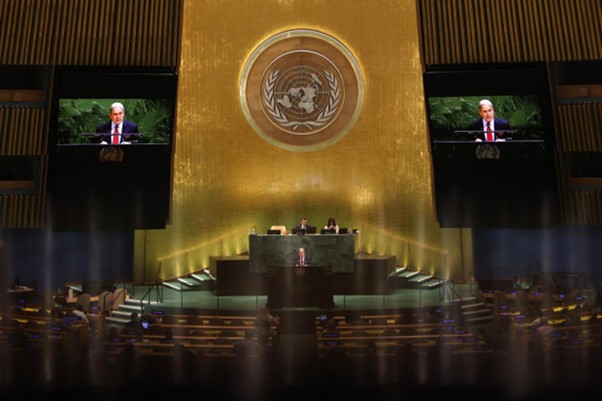
New Zealand has just decided to step aside from its close allies like Australia, Canada and the United Kingdom on the recognition of Palestine. The Foreign Minister keeping us guessing until the last moment. It has now also become evident that he did not present to Cabinet the full set of options prepared for him by his department. This was poor process, and it has led to a decision which damages New Zealand’s international standing, as has our positioning on the Oceans Treaty.
We now have legislation drawn up to weaken late access to voting in our elections. This takes us back to the 1900s and was not supported by any of the public service advice, nor by the bulk of public submissions. This change strikes at the very heart of the integrity of our democracy.
These are just some of the developments that raise questions about the ability of New Zealand’s state and electoral system to deal with the big issues that confront us and threaten our prospects.
Peter Davis, Emeritus Professor in Population Health and Social Science, University of Auckland
If you want to subscribe to my posts, go to https://peterdavisnz.com/ and follow the instructions. You will be joining quite a few others!
Discover more from Peter Davis NZ
Subscribe to get the latest posts sent to your email.
 Peter Davis NZ
Can any existing political system cope with a time in which growth is no longer possible? We are hitting biophysical limits because, surprise!, infinite growth is impossible on a finite planet. Human models of operation are based on growth. Problem!
LikeLike
I agree. This is not a partisan issue but a national one, although there is the issue of how we make a living if we have breached our natural capital limits and our major producers rely on land, water, and endless fish stocks.
LikeLike