
1. Simulating Societal Change (2019)
Peter Davis and Roy Lay-Yee, Springer
Available on Amazon
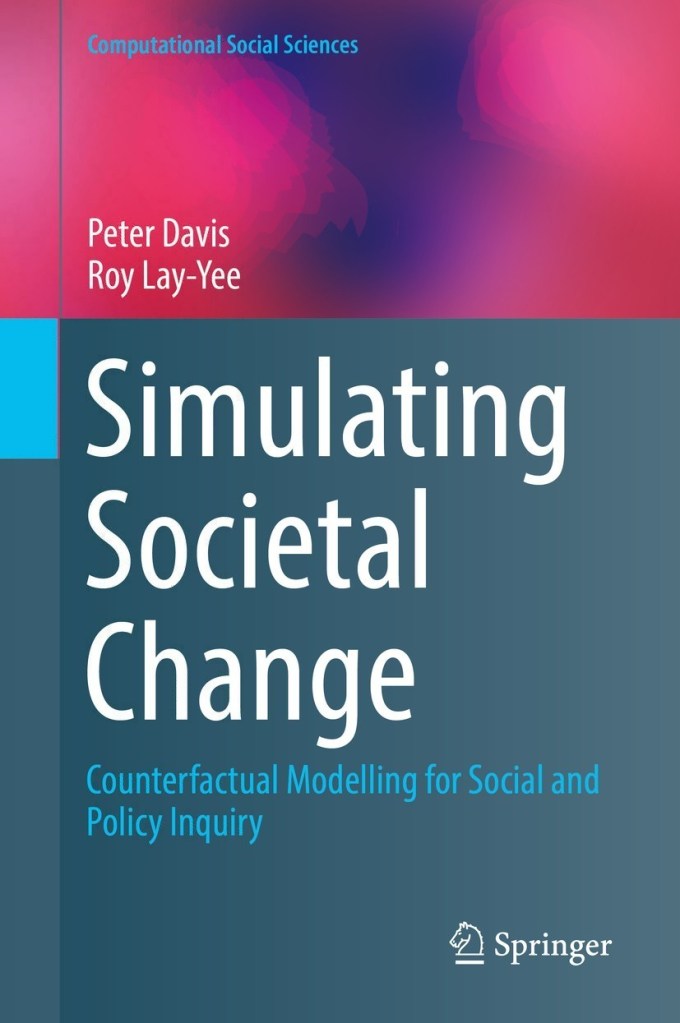
This book presents a method for creating a working model of society, using data systems and simulation techniques, that can be used for testing propositions of scientific and policy nature. The model is based on the example of New Zealand, but will be applicable to other countries. It is expected that collaborators in other countries can emulate this example with their data systems for teaching and policy purposes, producing a cross-national “collaboratory”. This enterprise will evolve with, and to a degree independently of, the book itself, with a supporting website as well as teaching and scientific initiatives. Readers of this text will, for the first time, have a simulation-based working model of society that can be interrogated for policy and substantive purposes. This book will appeal to researchers and professionals from various disciplines working within the social sciences, particularly on matters of demography and public policy.
2. Data Inference in Observational Settings (2013)
Peter Davis (Ed.), London: Sage Publications
Available at Waterstones

Most social research is carried out in observational settings; that is, most social researchers collect information in the “real world” trying to do as little possible to alter the circumstances of study. However, there is a fundamental problem with this kind of research, in that it is very hard to draw “causal” conclusions, because of the complexity and obduracy of social reality. This is not just a problem for social scientists interested in policy or social action. It applies across the board more generally because it becomes difficult to know, without the conditions for credible inference, what conclusions can be drawn from any piece of empirical research that aspires to be anything more than descriptive of social phenomena. This four-volume set of readings introduces the reader to the advances that have been made in trying to help social researchers draw more credible inferences from investigations carried out in observational settings. Drawing from a variety of sources – from logicians and philosophers, to applied statisticians, computer scientists and econometricians, to epidemiologists and social researchers – this collection provides an invaluable resource for scholars in the field.
3. Pharmaceuticals and Society: Critical Discourses and Debates (2009)
S. J. Williams, J. Gabe, & P. B. Davis (Eds.), Oxford: Wiley-Blackwell.
Available on Amazon

Drawing on the latest international sociological research, this monograph takes a critical look at contemporary developments, discourses, and debate on pharmaceuticals and society. Key issues covered include pharmaceuticals and medicalization and the science and politics of drug development, testing, and regulation Investigates the constructions of pharmaceuticals in professional and popular culture and the meaning and use of medications in everyday life Investigates pharmaceuticals, consumerism, and citizenship and the impact of innovation and expectations regarding pharmaceutical futures Written in a lively, accessible style, with many engaging and important insights from key international figures in the field.
4. Health and Public Policy in New Zealand (2001)
Peter Davis, Tony Ashton (Eds.), Auckland: Oxford University Press.

Health and Public Policy in New Zealand places on the public record the key changes that have occurred in health policy over the last fifteen years. It draws conclusions about both the processes and content of the policy-making in the health sector.
5. Health and Society in Aotearoa New Zealand (1999)
Peter Davis, Kevin Dew (Eds.), Auckland: Oxford University Press
Available on Amazon

This text offers fascinating insight into issues of public health and the healthcare system in New Zealand. Drawing on a number of significant studies, it provides a comprehensive overview of how New Zealand’s system evolved and what directions it is likely to take in the future
6. Managing Medicines (1997)
Peter Davis, Buckingham; Philadelphia: Open University Press
Available on Trove
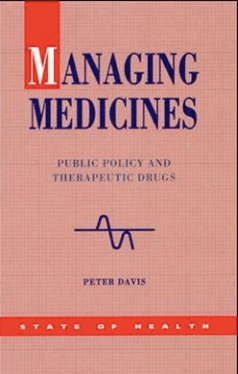
Medicines, and the policy issues they raise, are the subject of this book. Therapeutic drugs are widely used – some on routine basis, others in a highly selective and specialized fashion. Although we take the availability of such potent agents for granted, there stands behind them a complex and sophisticated system of scientific innovation, industrial production, state audit, and professional distribution. Major issues of price, innovation, safety, professional practice and consumer autonomy arise. Pharmaceuticals account for about ten per cent of health care costs, they are produced by a flagship industrial sector, they are jealously guarded by key professional groups, they raise formidable questions of quality and safety, and they are watched over by a vigilant and vociferous consumer movement. Managing Medicines seeks to disentangle these issues and come up with concrete suggestions as to how we might move forward in an area of public policy that is hotly disputed.
7. Contested Ground (1996)
Peter Davis (Ed.), New York; Oxford: Oxford University Press
Available on Trove
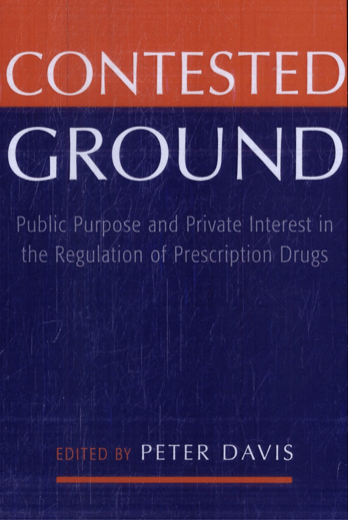
Addressing the key issues in the public debate about prescription drugs, this book establishes an analytical framework for the development of regulatory policy in this area. A range of international experts, working at the interface between the social sciences, pharmacy, medicine, and public policy debates, contribute to the delineation of these issues.
The underlying theme of the book is that therapeutic drugs should not be considered ordinary products. These drugs raise important social, ethical, and policy questions that transcend orthodox analytical approaches and that cut across conventional disciplinary boundaries. The object of this book, therefore, in not just to identify the major issues but also to develop some of the analytical foundations required to advance the course of public policy debate in this area.
8. Intimate Details & Vital Statistics (1996)
Peter Davis (Ed.), Auckland: Auckland University Press
Available on Trove

The book offers a history of AIDS in New Zealand and presents important and interesting research into the disease and into areas of social life that have previously been obscured by myth, taboo and legal prohibition. Contributors discuss the epidemic from the perspective of the groups involved, and outline the unique response of the New Zealand government and the public – a panic-free response characterised by early mobilisation, a preventive approach, and substantial involvement of the gay community.
9. For Health Or Profit? (1992)
Peter Davis (Ed.), Auckland: Oxford University Press

Most of us routinely take some form of medication. The industry that creates and sells these familiar products has immense scientific and commercial resources and operates globally. But what do we know of this industry in New Zealand, and just how well does it serve the public interest? As this book shows, the industry is not a disinterested partner. A more sophisticated model of medicine informed by the policy sciences is needed.
10. Introduction to the Sociology of Dentistry. A Comparative Perspective (1987)
Peter Davis, Dunedin: Otago University Press
Available on Amazon

This book offers an invaluable basis from which fundamental questions on the role of social factors in dental care may be addressed. It ranges from an analysis of utilization patterns and other activities in the lay culture, through to a wider social context of aetiology and social structure, to a consideration of the system of oral health care itself, and the role of the dentist within it.
11. Models of Society (1986)
Peter Davis, F.L. Jones, Sydney; London: Croom Helm
Available on Amazon

The aim of the book is to address issues both of class and stratification, as well as using primary data drawn from national surveys within an analytical and modelling framework. The book is of interest at the level of substantive theory and methodological endeavour. Its findings and techniques will be of interest in social policy and applied research in the social sciences.
12. Social Democracy in the Pacific (1983)
Peter Davis (Ed.), Auckland: Benson Ross
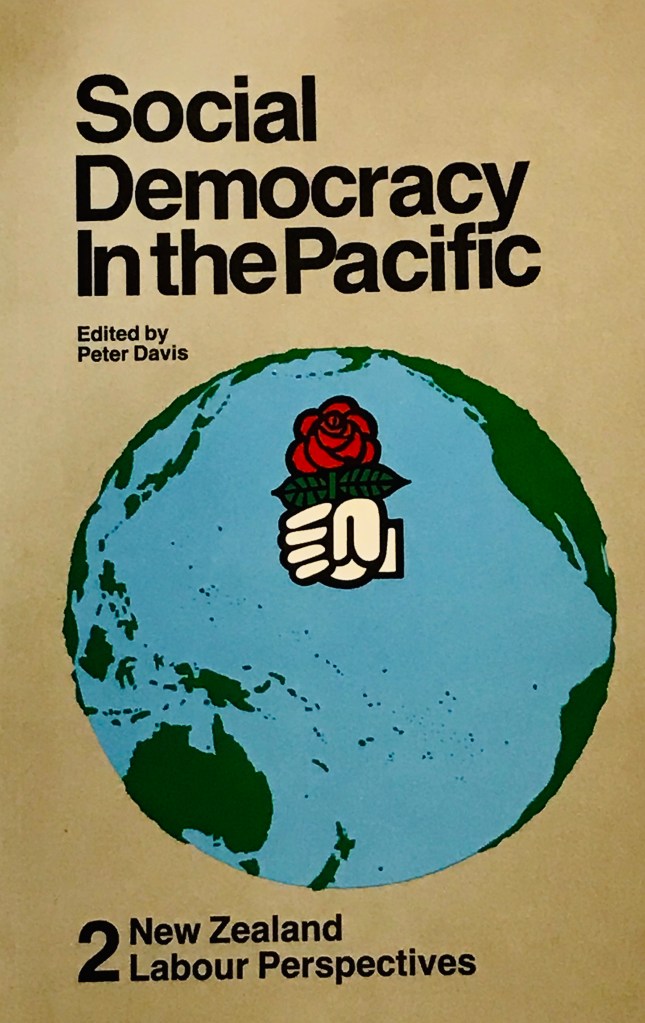
In the Pacific region is compressed over a century of industrial and urban development. In parallel with these developments there have emerged a series of political responses that echo the emergence of the early socialist, social democratic and labour movements in Western Europe. This book charts a selection of these developments, documenting their great political and cultural diversity, but also pointing to the evolution of some common responses that seem set to forge a social democratic regime for the Pacific.
13. Health and Health Care in New Zealand (1981)
P.B. Davis, Auckland: Longman Paul

This book presents an alternative perspective on health and heath care in New Zealand, challenging the traditional medical approach to health issues. The argument is illustrated with a wide range of statistics and it outlines a perspective that is more preventive in emphasis and that that promises a more humane and effective approach to health care delivery.
14. The Challenge of the Third Depression (1981)
Peter Davis (ed.), Auckland: Benson Ross

The contributors to this book consider the far-reaching institutional changes that New Zealand must undergo if it is to meet the challenges of the current economic recession. They represent a living tradition in a continuing radical, but constructive social and economic critique of New Zealand institutions.
15. The Social Context of Dentistry (1980)
Peter Davis, London: Croom Helm

This book places the major institutional features of contemporary dentistry within a broader historical and social context. It is argued that in it its occupational organisation and philosophy of practice, dental care has remained, as it was in the nineteenth century, focused on individual care, and has failed to develop a broader expertise in promoting and maintaining the oral health of whole communities.
 Peter Davis NZ