
Newsroom, 4 August 2023 (revised version of July 29 blog)
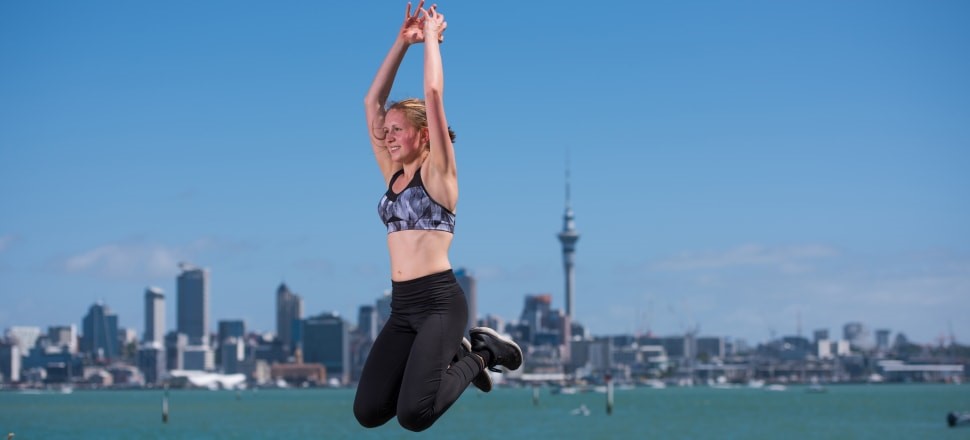
Paul Henry in an interview with Paula Bennett asks “what have we got be proud of in this country now?”. The leader of the opposition feels we have lost our mojo, and there are stories of business owners relocating to Australia.
Yet, it was not all that long ago that we excelled ourselves in how well New Zealand did in dealing with the pandemic. Nevertheless, in the context of a polarising election campaign, the mood has darkened since that period of sunny optimism, a mood accompanied by an unexpected and unprecedented undercurrent of disinformation, conspiracy theory, and alienation in the fluid and uncertain circumstances of a global crisis. This is the winter of our discontent.
So, what can we be proud of? What are the positives and, in the interests of balance, the negatives that can be extracted over claim and counter-claim in the heat of an election campaign?
Our level of well-being is world class. For example, according to the Prosperity Index compiled by the London-based Legatum Institute, a conservative think tank, we are the tenth most prosperous country in the world; a UN agency ranks us as tenth in the World Happiness index.
We also do reasonably well in the related areas of educational and health systems performance, although we could do better. According to the OECD’s PISA ratings, out of 40 countries we are tenth on reading, seventh for science, although quite a bit lower for mathematics (and our socio-economic differences are large). Australia has a national information system and are able to track trends closely – their scores are sliding too. The United States tracks performance, and one report claims they have lost all the advances made since 1980, mainly because of Covid. So, we have company in our educational concerns.
As for health, we are short of useful comparative data, but the OECD figures on numbers per capita of doctors and nurses – a highly contested area – show that we are above the OECD average, above Canada but some way below Australia.
Another area where we rank well globally is governance. There are a number of measures: Liberal Democracy is central to our political system and we are ranked sixth in the world; The Economist’s Democracy Index has us as second only to Norway; on the Cato Institute’s Human Freedom Index we are also second. We also do very well on our perceived lack of corruption, being second equal in the world. But on the OECD’s Trust in Government scale we are only middle of the pack.
This all seems very positive. But perhaps we have not tackled the hard areas, like the economy. The record here is mixed.
We do some things well. On the ease of doing business we rank first in the world, and according to the Heritage Foundation we are fifth on their Economic Freedom Index. We also have low public debt and a world class sovereign wealth fund (NZ Superannuation Fund), and our employment characteristics are impressive: our unemployment rate is among the lowest in the world and the proportion of the relevant age group in the workforce is world leading. By contrast, the number of young people not in work, education or training is only middling internationally. We could do better.
We are also well rated on aspects of our tax system; for example, we have the third most tax competitive system.
But then we get to the negatives. We have about the worst current account balance in the OECD right now. We have also dropped down the international rankings for export intensity, our R&D investment is low, as is our productivity and innovation generally, and our savings rate is low too. These are features we cannot be proud of, and they also keep us relatively poor and diminish our social and physical infrastructure.
There are other features of public policy that mark us down: we have a high level of reported violence against women; we have one of the highest levels of obesity in the world; our child poverty rate is still not something of which we can be proud; we have one of the highest levels of imprisonment in the developed world, second only to the United States (US) among European and Anglophone countries; our house prices are extraordinarily high; and our environmental credentials are questionable.
In summary, New Zealand has all the trappings of a European-style welfare state, albeit with a lower than average tax rate. This, together with our solid system of governance, saw us through the once-in-a-century stress test of the pandemic with flying colours.
But after that success we now face the shortcomings of a country that has, until the founding of the Productivity, Infrastructure and Climate Change commissions, largely ditched its planning and horizon-scanning institutions, and that continues to depend on a commodity-based economy that is excessively reliant on extracting value from its diminishing store of natural capital and that specialises in low-value, high-volume trades in timber, dairying, meat, fish, horticulture, mass tourism, and large-scale immigration.
Once the hurly-burly of electoral politics is over, we need to return to these bigger, long-term issues. The future of our plucky little country depends on it.
Tip O’Neill, a former Speaker of the US House of Representatives, once said that “all politics is local”. By the looks of the furore over potholes and ramraids, that seems apt. But let us not forget the role that informed, evidence-based debate of a broader kind can and should play in our deliberations on our country’s performance, both positive and negative.
Peter Davis, Emeritus Professor in Population Health and Social Science at the University of Auckland and chair of The Helen Clark Foundation, an independent, non-partisan public policy think tank.
If you want to subscribe to my posts, go to https://peterdavisnz.com/ and follow the instructions. You will be joining quite a few others!
Discover more from Peter Davis NZ
Subscribe to get the latest posts sent to your email.
 Peter Davis NZ
Peter Davis,
I am someone who complains about those who complain so I was very pleased to read your report.
I am a Canadian, living in France with connections in New Zealand and a few months ago I read an article of yours and have since been receiving your reports.
You are correct. People have so much to be thankful for. After reading your report, I spent the whole morning thinking about all the positive experiences I have had in my life. I believe I am appreciative because my early childhood in the 50’s and 60’s was a bit of a struggle, like many others. My family had little money so I needed to earn my own spending money including delivering the weekly magazine for which I made $1.30 per week and $1.00 went to pay for my dog’s food! The worst job I had, at 14 years of age, was picking roots and burning windrows on the neighbor’s farm at 30Celsius in the dusty field. Every job after that was better including the dishwashing job and the basement construction job. Ironically enough, although those were difficult jobs, today they are a very good memory. Most importantly, they provide me with a good point of reference.
In the 1990’s I was in marketing and sales, and, sales courses were the rage. The instructor was focused on setting goals and objectives. I suggested that we first needed to appreciate what we have before we look for more…. he did not agree. Still, I had much success in my business development career with BC Railway.
I do feel it is important to look back on what we could have done better, to improve in the future. Unfortunately, especially in politics, people look for ways to criticize and then that means people will not acknowledge where they could improve. The new Alberta Premier, Danielle Smith acknowledged that she had made poor choices in her life – the media were all over her!!! I hold her in high regards. The only people who don’t make mistakes are those who do nothing – then complain!!
It was 2005 when I was last in NZ. It is a good country and you do have lots to be thankful for.
Thanks again for your enlightening approach to solutions.
Gerry Lundquist
LikeLike
Thanks for getting in touch. It is not often that I receive praise for my columns/blogs! But just to note, I did point out a list of positives, but then I came to some areas where NZ could do better. But that kind of balance is absent from the cut-and-thrust of election year!
LikeLike
It’s interesting that, after 30 years of a science & innovation system that has had a goal of diversifying our economy (in which I’ve worked), we haven’t gotten very far. Maybe that says something about how difficult it might be to change the basis of a country’s economy. My view from observation is that the powers that be have a large influence – I saw attempts to shift the balance of funding going to primary production thwarted multiple times.
LikeLike
Interesting. In my view the issue is not increasing primary sector production per se (particularly when it is running down and even ruining our natural capital to achieve it), it’s adding value that farmers and the economy can capture in NZ, rather than most of the added value being made overseas. Not easy of course, but primary production is world-beating in its efficiency (at least dairying); it’s the fact that we just export the stuff for other people to make money on it while we remain paupers!
LikeLike
Your view of the issue is the same concern as expressed for the last 30 years in the RSI&T system in which I have worked (for government funding, running a University research office, 20 years of contracting to pretty much every much RSI&T organisation in NZ and to many companies to help them think through their projects and access funding). RSI&T has, for the last 30 years, been trying to increase value add to primary production and only marginally succeeding. My first observation would be that, if we have tried to add value to exports for 30 years and not succeeded hugely there is some fundamental aspect of this we are missing! I discussed this with a senior Fonterra exec, whose view was that niche has to be niche i.e. to have ‘niche’ you require a commodity that the niche exists in relation to (for a variety of reasons, including supply chain and market perception of the value of products). Fonterra has had its own huge push to add value and has succeeded in some areas but not beaten the central commodity challenge.
Take wool…we continue trying to add value to hard wool when consumers don’t want to buy it. Maybe we are missing the fact that if consumers don’t want something they don’t want it, however you repackage it. Take forestry, where the purchasers want to add value themselves, not pay more for you to add the value. The purchasers will simply go elsewhere if you try to add value – there’s little in which NZ commands so much of the market that there’s nowhere else to purchase raw product. Sauvignon blanc is a unique NZ product and an example of value add but wine is a very special industry, more like fashion than the rest of primary production where story is not such an important part of purchasing decisions and perceptions of value.
Then there’s food…a very tricky area I think, in that we know that the food that is best for people is the least processed food. But to ‘add value’ we generally mean processing of some type (I realise there is also new variety development which we do well, though timeframes are long). So we are pushing researchers to do what we know we ought not to do for best health outcomes.
I could go on at length about all the examples I have seen. I’m not saying it isn’t possible but that we should be better at consolidating 30 years of knowledge about where we have succeeded and why and where we have not succeeded and why not. That we still have simple ideas about adding value to primary production being the desirable and achievable goal, says to me that we have not yet consolidated that knowledge.
LikeLike
Food for thought. Not sure where we go from here. It is a big issue for New Zealand, and it may be that we are destined to remain a commodity-producing country relying on low-value, high-volume trades – until we run out of natural capital!
LikeLike
That’s the nature of most countries, unfortunately. Particularly unfortunate in the big picture in that we are running out of natural capital at a world scale – I think the drivers and needs in the coming decades will be quite different from the past decades. The positive note is that food will be something the world will likely be more in need of as crops fail due to heat/lack of water/lack of nutrients. But NZ needs to beat its addiction to fertiliser and irrigation to sustainability supply food.
LikeLike
Good point. But I don’t think the problem is “NZ” as in “NZ needs to beat its addiction”. It is the relevant primary sector industries that are a law unto themselves and refuse to budget on any of these issues in any meaningful manner. Not just dairying, although that is the most publicly debated, but also fishing (bottom trawling, bycatch etc). There have been reports after reports, and even under a government that should not be beholden to these industries almost nothing can be done, although David Parker has tried.
LikeLike
Maybe a law unto themselves…but maybe just very good lobbiers https://www.rnz.co.nz/programmes/in-depth-special-projects/story/2018902262/crown-vs-cow-the-inside-story-of-how-we-failed-to-regulate-our-worst-climate-polluter This so mirrors what I saw in the three years I worked in the Foundation for Research, Science & Technology.
LikeLike
Yes, another government has been unable to shift the dial on a sector that is absolutely obdurate. What can you do?
LikeLike