

Published in The Post, 10 March 2025
With the sudden departure of the Reserve Bank Governor, one has to ask whether there is a pattern here – of a succession of public sector leaders leaving their posts in uncertain circumstances and a series of decisions being made without much regard for due process.
It brings to mind the current spectacle of federal government politics playing out in the United States (US). Four years ago, we were observing a concerted attempt by a raucous and determined crowd to storm the Capitol. Now a smaller, more disciplined and just as determined band is entering federal offices in Washington almost unhindered to close agencies and programmes and to evict and terminate the employment of thousands of staff.
This could never happen here. Or could it? Or has it and is it happening here? After all, we had an occupation of parliament, we had a rapid unravelling of a previous government’s legislative programme, and we have experienced the removal of CEOs and downgrading of key public agencies such as Kainga Ora on slender pretexts, and the rapid and marked downsizing of the core public service establishment.
Similarly, while the incoming Trump administration is targeting any federal diversity agenda, in New Zealand the incoming government has sought to curb the advancement of Māori interests, even to the extent of questioning elements of our basic constitutional framework.
In other words, there are parallels, but also differences. This has mostly been conducted in a typical New Zealand low-key fashion, with more regard for legal niceties and less of the histrionics we see in Washington – yet it still bears comparison and probably reflects similar political dynamics.
Indeed, the departure in quick succession of three health sector leaders and the targeting of PHARMAC’s CEO suggest the agenda may be getting out of hand. In my experience of close contact with the DHB system the management and leadership teams at the top echelon were nothing short of outstanding. The Auckland District Health Board, as it then was, is the largest single organisation in Auckland – and the top management had to be up to the task. And they were.
As for PHARMAC, it is a standout agency for achieving value for money in the public sector. So why target it? The organisation has made cumulative savings of at least a billion dollars, equivalent to 5 per cent of the annual health budget. Those monies have been reinvested elsewhere in the health sector. Furthermore, by distancing politicians from sometimes controversial funding decisions on a limited budget it shields them from public blowback. Unfortunately, PHARMAC is the victim of its own success: the reinvestment of funds in the wider health sector has gone unheralded, and the shielding of politicians is rarely acknowledged.
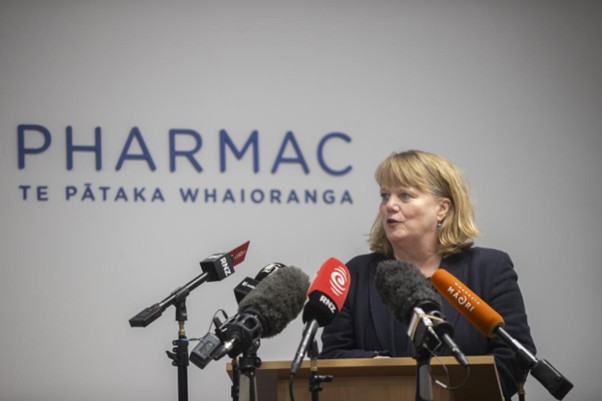
The job as CEO at PHARMAC has got much harder with a limited budget, more expensive drugs targeting smaller groups, more vociferous patient groups – sometimes funded in part by drug companies – easy media stories (individuals being denied “lifesaving” treatments), and, more recently, less sympathetic political masters. Perhaps it was time for a changing of the guard, but the ungracious manner of it follows a similar pattern of other departures.
The arrival of Sir Brian Roche as the new Public Service Commissioner may herald a more considered approach to public sector reform, rather than the slightly “wild west” New Zealand style with the unexplained abolition of the Productivity Commission, the premature ending of an expensive pumped hydro study, disbandment of sector industry groups, and the alleged cancellation of a large ferry contract by text, among other examples of a rather casual approach to due process.
The danger we run is that the current cleaning out of public sector leaders is more than an expected turnover with a change of government, and rather a curbing of independent advice and thought. Will our public media agencies – TVNZ and RNZ – be next in line for the current thrust of popular and political attention?

Taken together with the abolition of the Productivity Commission, major redundancies in the public sector, the removal of research funding for the humanities and the social sciences, a campaign by the Free Speech Union against university autonomy, the growing reliance on business lobbyists and lobby groups to determine decision-making, and the recent re-orientation of the New Zealand Herald towards a more populist stance, we could well be witnessing a concerted rebalancing of the ecosystem of advice and thought.
In half a century of observing policy and politics from the relative safety of the university, I have never witnessed such a concerted campaign as we are experiencing. Not even in the turmoil of the 1990s.
We need to change the national conversation before it is too late and we lose more of the key elements of the independence of advice and thought that we have established in the state and allied and quasi-autonomous agencies, as well as in the universities and the creative industries. These lie at the heart of our liberal democracy.
Peter Davis, Emeritus Professor of Population Health and Social Science at the University of Auckland, and former elected member of the Auckland District Health Board.
If you want to subscribe to my posts, go to https://peterdavisnz.com/ and follow the instructions. You will be joining quite a few others!
Discover more from Peter Davis NZ
Subscribe to get the latest posts sent to your email.
 Peter Davis NZ
I agree this is the most disturbing time in terms of threat to good government and management of NZ in my lifetime. In the 1980s, Roger Douglas’s actions were curbed by him being part of a left-wing government. There are few curbs remaining. In the 1980s, we were at the forefront of change. Today, there are many other examples that we are following, which makes it much more likely our changes will go further.
I do take issue with a couple of your specifics, in the interests of well founded argument:
Cheers
Jane
LikeLike
Good points. But I am not sure what funding is left. Without Marsden you would rely on study leave? I was fortunate in my career to segue into health where there is much more funding. As for the issue of free speech. Yes, there may well be inhibitions of a kind now that I never experienced in my time in the university. I do remember discussions about political correctness, but it did not seem like a culture war. The problem I have with FSU, as with Taxpayer Union, the whole swirl of conspiracy and other theories, is that it seems to be importing culture wars from the US. It feels alien.
LikeLike