
Published in The Post, 26 June 2025
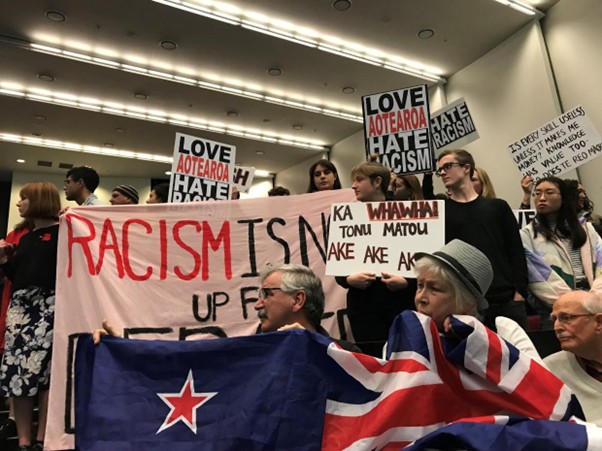
The current push to mandate “free speech” policies in New Zealand universities in legislation currently being considered before Parliament’s Education and Workforce Select Committee represents a manufactured crisis designed to erode academic freedom while appearing to protect it. It is in danger of importing culture wars and allowing external actors through the agency of the state to curb, rather than expand, academic freedom – under the aegis of advancing “free speech”. As the recent removal of humanities and social sciences from Marsden funding suggests, there is a danger that an initiative of this kind can align with the closing not the opening of intellectual and academic debate.
The government’s own assessment of proposed amendments to mandate free speech on campus show the manufactured nature of this ‘crisis’. Officials acknowledge having “limited evidence on the actual extent and impact of freedom of speech concerns in New Zealand” and that “many of these concerns are anecdotal.” Indeed, a recent op-ed in The Post supporting the current legislation did not cite a single recent example of a major intrusion on “free speech” that would have required the exercise of the kind of powers envisaged in the legislation.
When a government can’t demonstrate that a problem exists, why are we creating legislation? Are universities being deliberately targeted because they are oases of intellectual civility, freedom, and exchange and because speakers gain something they cannot get elsewhere: the implicit endorsement of academic or educational respectability when they speak on campus? By this, we mean that an idea presented in a lecture hall is more likely to be believed than an idea presented on a speaker’s corner.
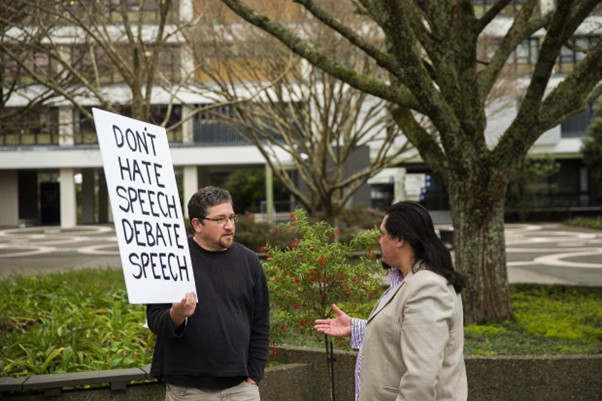
As Professor Joan Scott succinctly explains: “free speech makes no distinction about quality; academic freedom does.” This difference is foundational to why universities exist. Academic freedom protects rigorous inquiry conducted according to scholarly standards. It shields researchers pursuing evidence-based knowledge from political interference. Free speech, by contrast, makes no quality judgments; it protects all expression equally, regardless of whether it meets any scholarly criteria or contributes to accepted educational purposes.
When we confuse academic freedom and educational purpose with a simple declaration of “free speech”, we transform universities from institutions that advance knowledge and education into platforms where any idea can claim legitimacy simply by demanding access. Universities, as autonomous, self-governing institutions, with a well-developed mission and history of research and education should be allowed to make this judgement call, not an external agency of the state.
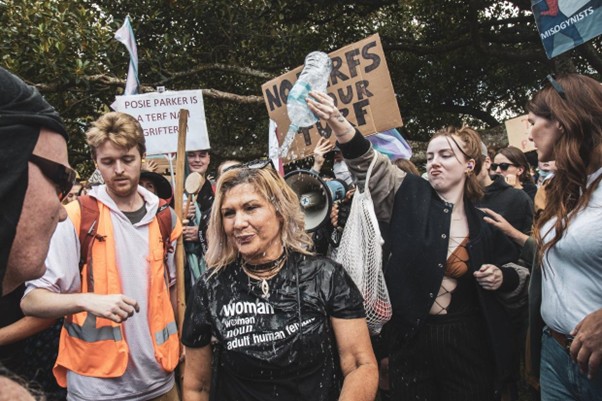
Close by the University of Auckland is a designated speaker’s corner in Albert Park where anybody can argue any idea. Indeed, not so long ago, there was a major furore over the speech of “Posie Parker” in this area that required police intervention. While the topic could well have been discussed on campus, the way it was set up was designed to cause controversy and potential police intervention and is the kind of manufactured intervention the university does well to avoid.
A recent op-ed from a “free speech” advocate argued that institutional neutrality is key to academic freedom. Universities do provide neutral ground on campus for academics to explore and conduct research and for members of the university community including students to debate issues, but they also engage in public facing policies such as which research they choose to put on their alumni magazines, what partnerships they pursue, which research they fund, who they promote, and how they allocate resources. Everyday universities, as autonomous, self-governing organisations, make decisions that reflect values and priorities. These everyday choices are driven by values that ultimately shape and reflect a university’s mission.
Yes, universities are spaces to test ideas and engage in pushing boundaries, both in research and educational purpose, but this is done through a process that has been refined over hundreds of years and multiple generations and relies on evidence-based discourse, whether that be in traditional academic research or in debate on campus.
The Deputy-Prime Minister, David Seymour, recently took part in a debate on a controversial topic organised by the student union on the campus of Oxford University. Undoubtedly this followed well-established university guidelines on conducting such debates. This is an example of how universities can push the boundaries not only in conventional scholarship and scientific research but also on debate as part of their dual mission, which is to advance knowledge and educate future generations, including informing public debate in a constructive manner.
It is surely wrong to force universities to bend the knee to an external agency of the state. They are autonomous, self-governing organisations that have used their independence judiciously to protect the freedom of their staff to push the boundaries of research, to encourage and manage debate on key issues on campus, and to inform public debate through civil, constructive and evidence-based contributions. If universities were to lose this autonomy they would also lose their credibility as independent learning institutions and ultimately endanger the very concept and nature of a university, as seems to be occurring at present in the United States.
Sereana Naepi, Associate Professor and Rutherford Discovery Fellow, School of Social Sciences, and Professor Peter Davis, Emeritus Professor in Population Health and Social Science, both at the University of Auckland.
If you want to subscribe to my posts, go to https://peterdavisnz.com/ and follow the instructions. You will be joining quite a few others!
Discover more from Peter Davis NZ
Subscribe to get the latest posts sent to your email.


Excellent article. Thank you both very much.
Stella Sweney
LikeLike
Beautifully argued, Peter. Let’s hope this aspect of legislation does not make it into the eventual Act.
LikeLike