
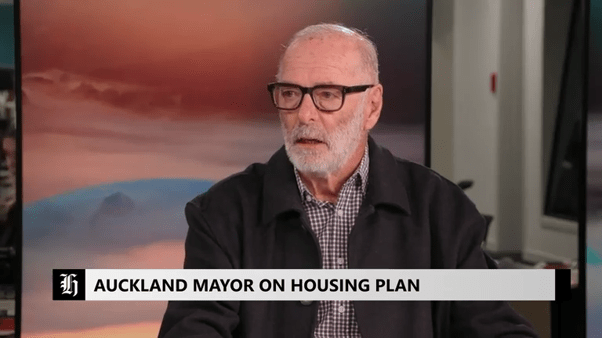
Published in The New Zealand Herald, 19 June, 2026. Derek Cheng
Political flip-flops and kowtowing to the homeowner voting bloc have put housing in New Zealand on a pathway that’s “neither economically rational nor socially sustainable”.
That’s according to fresh analysis of the housing crisis featured in the upcoming book Facing Up To Our Future: Challenges and Choices for New Zealand, published by the Helen Clark Foundation.
It brings together 21 leading thinkers on critical issues in the lead up to the November election, including infrastructure, energy, the environment, education, tax reform, Te Tiriti o Waitangi and Auckland. Featured authors include former Treaty Negotiations Minister Chris Finlayson KC, former Climate Change Commission chair Dr Rod Carr, Victoria University Emeritus Professor Jonathan Boston and the NZ Initiative’s Michael Johnston.
The book echoes major reports over previous years and decades in calling for a more bipartisanship approach to key issues, while ditching short-termism and political opportunism for a longer-term approach.
But this need is becoming increasingly acute, according to the book’s editor and sociologist Peter Davis, who is Helen Clark’s husband. He writes in the book’s introduction about “the shrinking base of the major centrist parties, the polarisation of opinion, the amplification of these issues by mainstream and social media on a 24/7 cycle, with the hollowing out of the public service and the relative absence of universities from the public square”.
Davis authors or co-authors chapters on tax reform, healthcare and the housing crisis, where he cites multiple factors contributing to a housing system that “performs poorly across nearly every dimension that matters: affordability, security, quality, equity, and economic efficiency”.
This is despite the national average house price falling from its peak in early 2022, including by 22% in Auckland if adjusted for inflation, according to a Herald analysis.
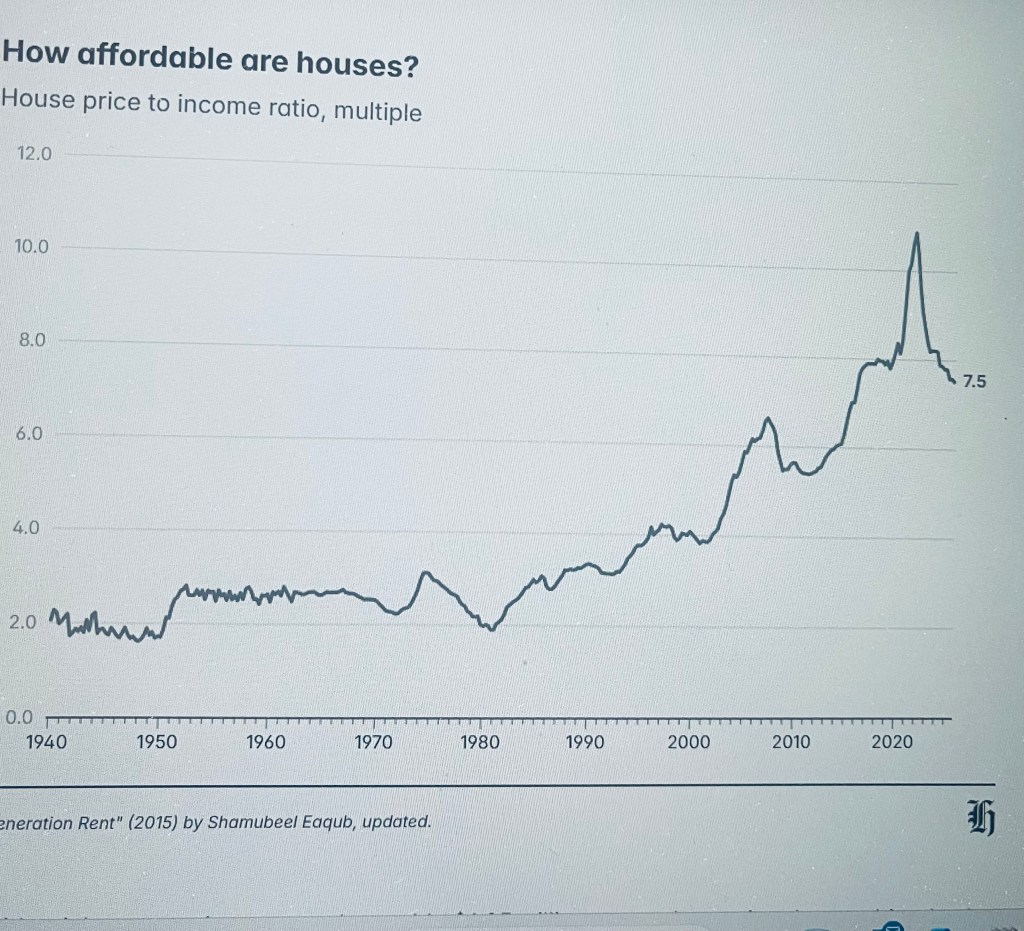
Major parts of the housing problem are the flip-flops of changing governments and the risk of losing the homeowner vote, Davis says.
While home ownership fell from 74% in the early 1990s to 66% today, it remains a “large and electorally powerful voting bloc” that politicians cannot and do not ignore.
This was in part the reason behind National withdrawing from its housing density accord with Labour on the Medium Density Residential Standards, which some homeowners fiercely opposed because of impacts on their property values and neighbourhoods.
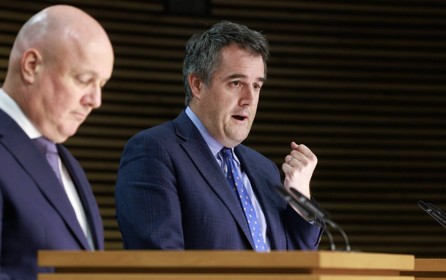
More recently, the Government backed down from housing intensification plans in Auckland after concerns from homeowners in leafy suburbs, even though the estimated benefit was in the billions of dollars over a decade.
Davis also points to policy reversals with changing governments, including the bright-line test, interest deductibility for landlords, and the role of Kāinga Ora in urban development.
These create sector uncertainty that contributes to relative housing scarcity, alongside a tax system that incentivises investment away from supercharging productivity and towards housing as a vehicle for amassing private wealth.
Residential property is now worth roughly $1.65 trillion, more than twice the combined value of commercial property, the domestic equity market, and all managed superannuation funds. Nearly two-thirds of the $550 billion in bank lending in 2024 went into housing, Davis says.
“This concentration gives housing an outsized role not only in household balance sheets but also in macroeconomic stability and political decision-making. It has produced a sharp divide between those who own housing and those who do not – one that increasingly shapes life trajectories.
“Housing wealth is disproportionately concentrated among older and higher-income households, reinforcing intergenerational inequality and magnifying resistance to reform.”
This has made housing “a defining axis of social division, between owners and non-owners and across generations”.
“In 2024, the wealthiest 10% of households owned nearly half of all wealth, while the poorest half owned less than 7%.”
Meanwhile homelessness remains “stubbornly high”, renting has become a “long-term condition” for those who cannot afford a house, and the Government forks out more than $4 billion in housing-related subsidies.
Treating housing as a means for private wealth accumulation rather than essential infrastructure “is neither economically rational nor socially sustainable, but rather a recipe for continued drift, rising inequality and mounting fiscal pressure”.
The necessity and unlikelihood of political agreement
Central to any remedy is a cross-party Housing Accord to insulate the sector from “routine electoral reversal”, Davis says.
It could include general but binding objectives such as:
- sustained supply responsiveness in high-demand urban areas
- minimum annual delivery targets for public and community housing
- stable national direction on density and transport integration
- tax neutrality between housing and other forms of capital investment
This latter point in particular seems fanciful, however, given the governing parties’ staunch opposition to taxing wealth, land or capital gains, while those to the left of Labour criticise its proposed CGT as being too weak to move the housing dial.
Davis also suggested social housing should be scaled in line with population growth, while the regulatory pendulum should swing away from landlords towards renters.
Fixing the crisis would flow into other benefits, he writes.
“Housing stress is strongly associated with poorer physical and mental health, educational underachievement, and family instability. In 2024, one in six tenant households spent more than 40% of their income on housing, a widely used indicator of severe stress.”
Overlapping issues
A common thread through many of the book’s chapters is the interconnectedness of key issues.
Secure and stable housing means, over time, reduced fiscal pressure on the health, welfare and justice systems, Davis writes in the housing chapter.
In an education chapter, Auckland University Professor Stuart McNaughton writes about the “persistent achievement gaps for Māori and Pasifika students, and for students from communities experiencing material hardships”.
While teaching quality is “the single most important in-school factor”, there are many and complex reasons behind the inequity that “extend well beyond the classroom”.
“They include the legacies of colonisation, structural racism, unequal access to resources, and differences in housing, health and income security.”
Serviceworks managing director Mark Thomas writes about the impact of housing and transport in Auckland on the country’s weak productivity.
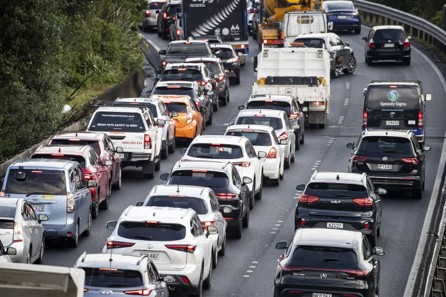
“High housing costs and unreliable travel times force households into difficult trade-offs: overcrowding, long commutes, or reduced access to jobs, education and services. These pressures fall unevenly, with lower-income communities bearing a higher share of housing and time costs.”
Among proposed reforms across several chapters are:
- A cross-party Housing Accord with binding objectives, urban intensification, stronger tenant protections and movement toward tax neutrality.
- An independent fiscal watchdog to produce long-term projections, test the sustainability of policy and put fiscal trade-offs in front of voters.
- Commerce Commission powers to act independently, require key information and intervene to improve entry and competitiveness in key markets.
- A broader tax base: contributory funding for superannuation and primary healthcare, plus a uniform rate on capital income, separate from labour income.
- A Parliamentary Commissioner for Future Generations to give long-term interests an institutional voice.
- Binding environmental limits to replace voluntary rules, and incentives for environmental improvement.
- Lobbying regulation and Official Information Act reform to halt New Zealand’s slide on the Transparency International’s Corruption Perceptions Index.
- A levy on commercial revenue streams such as digital advertising to raise money for public-interest journalism.
- Multi-party agreement on long-term infrastructure reform.
- Simplify the welfare system: higher core benefits and fewer supplementary payments.
- A renewed long-term commitment to principled multilateralism and the rules-based international system, including sustained Pacific climate leadership.
Helen Clark says the book raises ways of addressing challenges that require more than short-term fixes.
“Enduring solutions require collaboration, compromise, consensus-building, and commitment which extend over electoral cycles. That should be the starting point for the kind of evidence-based, long-term policymaking New Zealand needs.”
Facing Up to Our Future is available for preorder from the Helen Clark Foundation.
Among proposed reforms across several chapters are:
- A cross-party Housing Accord with binding objectives, urban intensification, stronger tenant protections and movement toward tax neutrality.
- An independent fiscal watchdog to produce long-term projections, test the sustainability of policy and put fiscal trade-offs in front of voters.
- Commerce Commission powers to act independently, require key information and intervene to improve entry and competitiveness in key markets.
- A broader tax base: contributory funding for superannuation and primary healthcare, plus a uniform rate on capital income, separate from labour income.
- A Parliamentary Commissioner for Future Generations to give long-term interests an institutional voice.
- Binding environmental limits to replace voluntary rules, and incentives for environmental improvement.
- Lobbying regulation and Official Information Act reform to halt New Zealand’s slide on the Transparency International’s Corruption Perceptions Index.
- A levy on commercial revenue streams such as digital advertising to raise money for public-interest journalism.
- Multi-party agreement on long-term infrastructure reform.
- Simplify the welfare system: higher core benefits and fewer supplementary payments.
- A renewed long-term commitment to principled multilateralism and the rules-based international system, including sustained Pacific climate leadership.
Helen Clark says the book raises ways of addressing challenges that require more than short-term fixes.
“Enduring solutions require collaboration, compromise, consensus-building, and commitment which extend over electoral cycles. That should be the starting point for the kind of evidence-based, long-term policymaking New Zealand needs.”
Facing Up to Our Future is available for preorder from the Helen Clark Foundation.
Derek Cheng is a senior journalist who started at the Herald in 2004. He has worked several stints in the press gallery team and is a former deputy political editor.
Discover more from Peter Davis NZ
Subscribe to get the latest posts sent to your email.

