
Published in Ingenio, Autumn 2026
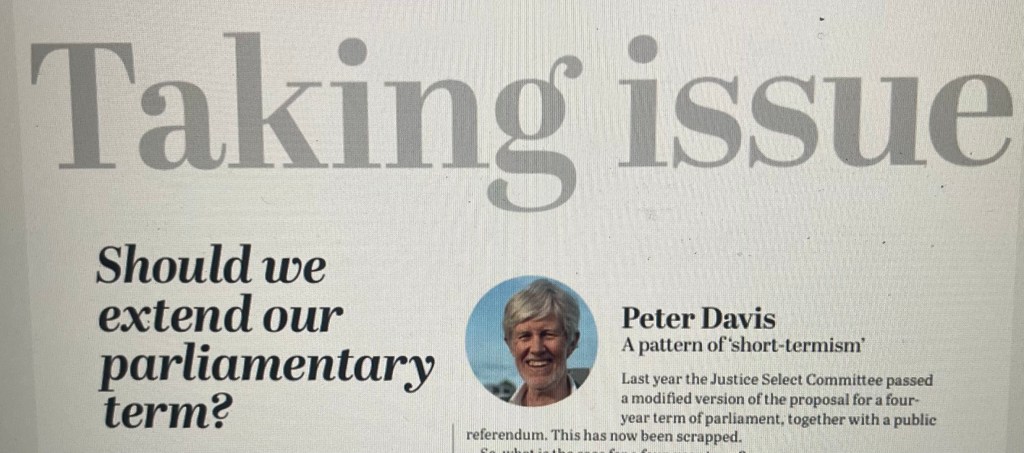
Last year the Justice Select Committee passed a modified version of the proposal for a four-year term of parliament, together with a public referendum. This has now been scrapped.
So, what is the case for a four-year term?
For a start, New Zealand is one of just eight jurisdictions out of 186 countries with active legislatures that provides for a term of just three years or fewer. Indeed, along with Australia, we are the only countries with a Westminster system of government to have three-year terms.
But the major argument in favour of a longer-term is a constitutional and political one – that it could provide for more considered policymaking and therefore for better governance.
There are also financial considerations.
For example, if the dominant pattern becomes, say, two four-year terms rather than three three-year terms under the current model, this puts less pressure on the Electoral Commission, particularly if the same rules apply to local body elections.
Further, business reduces investment in election years and governments put off economic and social reforms of long-term consequence when electoral considerations are proximate, underpinning the New Zealand pattern of “short termism” in policy decision-making.
Any proposal of this nature must get a 75% Parliamentary majority or pass a referendum. The signs are not good. The issue has been put to the public twice before (in 1967 and 1990) and been roundly rejected on both occasions.
The public could well be much better disposed to a four-year term if such a move was part of a wider reform of governance, including reform of Parliamentary procedures to give the legislature greater power and effectiveness.
A move to a four-year term would be of value to the future good governance of New Zealand by reducing the frequency of short-term electoral change and by increasing time for consideration, negotiation and scrutiny, but this would be particularly the case if such a move was taken as a first step in a longer-term process of reform to enhance democracy, transparency, and accountability.
Peter Davis, Emeritus Professor in Population Health and Social Science, University of Auckland.
*An earlier version of this article appeared in The Post, 4 September 2025
If you want to subscribe to my posts, go to https://peterdavisnz.com/ and follow the instructions. You will be joining quite a few others!
Discover more from Peter Davis NZ
Subscribe to get the latest posts sent to your email.

